By Sydney Skiles
I have always loved growing things. There’s something so invigorating about watching a tiny seed sprout, grow, and eventually become something fruitful. As I’ve gotten older, I’ve realized that almost every lesson the garden teaches has a parallel to life. The garden has become more than a hobby, it has become one of my greatest teachers and grounded me in more ways than I could’ve imagined.
So when I became a mother, I knew I wanted my children to grow up with a garden. I wanted them to grow up with their hands in the dirt and learning all the lessons that come with growing things.
I wanted my children to learn patience in a world that expects everything instantly. I wanted them to understand that nothing worth having comes easily or quickly. You have to tend a garden the same way you tend relationships, character, and new skills. There will be weeds. There will be setbacks. Sometimes you’ll lose plants despite your best efforts. But when you continue showing up, even when it’s hard, fruit eventually comes. The garden will grown, and you will too. There are no shortcuts to growth.
I am not only a mother, but also a preschool teacher. The more children I meet each year, the more convinced I become that these lessons matter. We are raising children in a culture of instant gratification. Many of my students struggle to sit through a story or patiently listen to directions because the world around them moves so quickly. Entertainment is available with a swipe and waiting has become obsolete.
But something that seems to sadden me more and more is how so many children are disconnected from where their food actually comes from. So many genuinely don’t know that food is grown in soil and tended to until harvest. Packaged food on grocery store shelves has replaced real nourishing food and it’s harming children in more ways than one.
As a mother, I wanted something different for my children. I wanted them to get their hands dirty. I wanted them to know that carrots are pulled up from the ground, tomatoes ripen on a vine, and peppers start as seeds. I wanted them to understand that the food on our table is a gift that begins long before it reaches our kitchen.
More than anything, I wanted them to stay connected to what is real. I wanted them to see the slow rhythms of creation, the beauty of hard work, and see the fruit you can harvest when you commit to helping something grow. I hope one day my children will look back and appreciate all the lessons learned from our garden.

By Shayla Lucas
This year, I am leaning more into the idea of really establishing perennials in the garden. I love the annual garden, but I am in a season of life with young children that annuals are a lot more work than I am able to really manage right now. I’ve always loved starting my own seed so that I can grow my plants organically from the start, but managing seed starting and also the replenishing and flipping of the garden beds with new crops every year is a lot of work for me currently as the main gardener in the family.
I want to produce as much food for my family as possible, and I know perennials are hardy, they want to keep growing and expanding and producing, with a lot less work from the gardener than annuals. Perennials also seem to be so much more pest and disease resistant than annual foods, such as tomatoes, beans, squash, etc. I also see the possibility of using more of my garden real estate for perennials to have cash crops to sell some of the food grown to my local community.
For years, I have truly enjoyed watching my asparagus and strawberries share garden space and continue to grow and produce for our family. I currently have three different types of asparagus in those beds: Jersey giant, Purple Passion, & Mary Washington. Among those plants are also everbearing strawberries, my favorite, Ozark Beauty, and they seem to thrive together. There are not really pests, other than my dairy goats that seem to be drawn to the berry plants when loose.
I also have a high tunnel that I am planning to transition from an annual production space to a perennial one, as I have seen this done by a friend here where I live in southern West Virginia and his production is wonderful. He has a whole row of fig trees down one side of the tunnel, fresh figs being something that we don’t have access to down here unless someone grows them locally or you do yourself. In the center of his tunnel, he has an entire row of Prime Ark blackberries that literally almost climb to the top of the tunnel and produce some of the largest berries, all sweet and uniquely flavored, that I’ve ever seen. In his rows, he mixes in other crops that benefit pollinator interaction and pest control, like hyssop. And then, something that is very neat, he keeps kale plants, years old, basically perennialized, that have stalks as thick as trees, throughout the rows. Seeing this low maintenance system really has inspired me to transition what I am doing every year so that we are harvesting more, planting and fussing over plants less.
For my tunnel specifically, I have planted a row of fig trees, just like my friend, Chicago Hardy. I am planting the Prime Ark blackberries in the center, just like him. I am going to try to squeeze in a row of Heritage raspberries, because I think the tunnel keeping the plant and berries dry will be very beneficial for harvesting quality food and then we can also harvest the leaves for Raspberry Leaf Tea, which I love and use a lot during pregnancy and breastfeeding. Somewhere among this perennial jungle, I want to plant strawberries and asparagus. And then in the front of my tunnel, at the entrance, I have a very small section that I’d like to plant rhubarb.
Last, another perennial addition that I am super excited to add to the tunnel is a mixture of mushroom varieties. I have ordered a type of mushroom called Winecap that grows in the beds/aisles of the garden in wood chips, which I have a lot of because we use them in a no-till/low till setup in the tunnel. These mushrooms seem to be very productive, easy for beginners, and also pretty self-sustaining, so I’m eager to see how they spread and produce in the 24 x 48 tunnel space. Another plan, that we will try this winter, is outlining the beds in the tunnel with oak logs inoculated with Shiitake mushroom spawn. Again, I am trying to grow and produce crops that are very low maintenance and take little effort out of me. We happen to have a lot of white oak around us, and just so happens down the road right now, our neighbor is having his property logged, so he is letting us harvest the scrap trees tops of his hardwood trees to inoculate with the mushrooms. This is something I think my whole family will enjoy, as my kids and husband love to use power tools, and it is something we can do during the “off” season of the garden and homestead, in the garage near the wood stove.
These crops are all foods we eat as a family, but also something I think I can really rely on as a cash crop for selling locally. Outside of the tunnel, I am also excited to plant some new gooseberry plants I got from a seed festival in Missouri this summer at Baker Creek Seeds. I plan to plant them by my house on the eastern side, to hide them from the evening sun and heat. I have also picked out three peach trees to grow on the south-most facing point of our yard, because my children love peaches. I want to continue to add other fruit trees and even some elderberry patches, but finding locations to do that is always the trick, I have found.
I planted fruit trees many years ago when we first got to our property, having bought them from a local nursery and not doing any research on the varieties when I got them. They seemed to not have good disease resistance, so every year their growth was poor and their leaves always seemed unhealthy. I am now making sure I do research and only buy plants that have good disease resistance before I waste money and years of time on ones that do not.
Overall, I think this shift to much more perennial plants will be a good move for our family in this current season of life, and we will still grow our annuals, just at smaller amounts and with more intention so that I am not overwhelmed with their care and potential failures, as I raise my 5 year old daughter, 3 year old son, and unborn baby in the garden alongside their father and I.

Prime Ark Blackberries being grown in the high tunnel.

Kelsey Gable standing in the perennial high tunnel with all the plants!

On the left a row of figs and on the right a row of blackberries in the high tunnel.

Fresh, local figs!

Fig trees growing inside the high tunnel.

Companion planting is a great way to maximize space in a garden. Companion planting is when two or more different species of plants are planted in close proximity to each other in the garden because they are beneficial to each other and to the garden as a whole. Companion planting can attract beneficial insects to your garden, increase plant growth through nitrogen fixation, and even repel unwanted pests from the garden.
The most common usage of companion planting is with corn and pole beans. The pole beans are able to use the corn stalk to climb, and the beans fix nitrogen which increases the growth of the corn. Allowing the pole beans to use the corn stalk as their “pole” to climb creates more room in the garden for other plant varieties rather than having a separate space for the beans to climb. Other common companion plants are tomatoes and marigolds as well as peppers and basil. Marigold and basil are both known pest repellent plants which protect the tomato and pepper plants from pests.
There are several other combinations of plants that can be used in companion planting. Incorporating companion planting in a garden is a perfect way to create a healthy, beneficial garden especially if you have a limited garden space!
As Pine Mountain Settlement School’s site coordinator for Grow Appalachia’s Garden Grants Program, some of the moments I look forward to the most are our summer garden visits. Beyond seeing what is growing in our participants gardens, I value the opportunity to listen to the stories rooted in each plot. In this blog post, I’m honored to share a few of those stories with you, offering a glimpse into the lives and experiences of the gardeners I visited.
abc
Maurica Cornett is a seasoned Grow Appalachia participant, her expertise and garden skills speak for themselves if you’ve ever tried her salsa (September 2025 Blog Post featuring Maurica’s salsa ). For Maurica, gardening isn’t just about growing plants, it’s also about bringing people together. While walking around her property, she mentioned not only the vegetables she planted but also why she chose to do so. When I saw her cabbage patch, she showed off a fabulous bunch of plants just about ready to harvest, which she plans to bring to our next workshop to demonstrate the fermentation process in her sauerkraut recipe.

Maurica picking cabbage
Della and Charles Shepherd ‘s garden exists in conjunction with their farm, and each aspect is intentionally designed to optimize production while reducing labor. From irrigation setups to their personally crafted fold-up row netting, they continue to develop ways to make their thriving garden into an even more efficient system. Della and Charles have a wealth of knowledge yet remain lifetime learners; this trait is especially evident in their approach to overcoming challenges in their garden.

Della and Charles pointing out their irrigation system

Della picking berries

Potato plants growing in compost‑filled cardboard boxes
abc
Nematodes may be small creatures, but when present in soil they create big problems. Nonetheless, Della and Charles have designed a method which works for their gardening practice. It’s simple but, like everything else at their farm, highly efficient. Using recycled cardboard boxes and compost from their pile, they rely on the curated pressure of a nutrient rich environment as a chemical free solution to increase harvest numbers and prevent extensive damage from nematodes. According to Charles, whether or not this design is a perfect solution remains undetermined – “the jury’s still out”. However, their desire to create a solution rather than accept defeat is indeed a testament to their dedication of learning
Ricky Jones has a picturesque setting for his garden, with “Butterscotch” the pony, peacefully grazing in the background . However, his plot isn’t just a pretty site, it’s also incredibly productive. He and his wife, Barb Jones, joined us during our garden visit and mentioned the basketfulls of squash they’ve collected over the past week
abc

Ricky in front the garden he remembers from his childhood

Ricky's squash plants with Butterscotch in the distant background
abc
One of Ricky’s plots has been producing food for as long as he could remember, he even recalls running through rows of corn there as a child. The area was once farmed by his father, and now Ricky continues to work the soil with rows of pumpkin, squash, corn, and more.
Although there are many more stories to share and gardens to visit through these experiences, the reflection of Grow Appalachia’s impact is seen, a community learning and growing together to cultivate a land that sustains them.
Flavor That Lasts
We have been a busy group since our last blog. The ups and down of the wet weather have been a challenge with new pests and diseases popping up in our gardens, but thanks to our Maintaining Our Garden Workshop where we learned to be on the lookout for certain things and help from Paul Sizemore, our local Ag Agent, we have identified problems and found solutions, using our organic pesticides and pre-planning before planting. Our group members have been actively helping each other by answering questions on every subject from garden maintenance to canning and dehydrating recipes and methods they use in their own processes.
There is nothing quite like opening a jar or freezer bag and tasting the bright, sun-ripened flavor of a homegrown harvest long after our growing season has ended. Our group’s journey from the garden to the pantry is about more than saving produce—it is about honoring the work, memories, and traditions that come with growing it.
We are deep in preserving our harvests with canning, dehydrating, freezing, canning and freeze drying. Each member of our group chooses which methods work best for them. We are reducing food waste, saving money, and enjoying our homegrown fruits and vegetables from our gardens, year-round. These techniques are helping us hold on to the colors, aromas, and flavors of summer.
To strengthen our skills and confidence, our group is taking part in a hands-on workshop with the Owsley County Extension Service. With Family and Consumer Sciences FCS Agent Crystal Osborne leading the session, covering the basics and safety of canning and dehydrating while stressing the importance of research-based practices. Members are learning and reviewing proper preparation, processing methods, equipment essentials, and food safety guidelines to help ensure high-quality, shelf-stable results while getting to ask questions about techniques they have already been putting into practice this season.
If you have ever wanted to preserve your own homegrown garden bounty, now is a great time to begin. Try a method at home, experiment with a new recipe, or join one of Grow Appalachia’s programs to learn with us. Together, we can fill our pantries with wholesome organic homemade foods while carrying on meaningful Appalachian traditions, and making sure the best flavors truly last.

This growing season feels different.
After two years of flooding and disappointing harvests, there is a renewed sense of hope in our gardens. Many of our growers chose to plant smaller gardens this spring, uncertain about what the weather might bring. Understandably, they carried the memories of past seasons and the fear of losing another crop.
As the weeks have passed, those worries have slowly begun to fade. Healthy plants are thriving, harvest baskets are filling, and our growers are once again finding joy in spending time in their gardens. It has been encouraging to watch hope replace uncertainty.

One of the greatest blessings this season has been seeing several young families join our gardening group. Little hands are digging in the dirt, watering plants, and discovering the excitement of growing their own food. These moments remind us that gardening is about so much more than vegetables—it is about teaching life skills, creating memories, and building confidence.

One family’s zucchini plants have produced such an abundant harvest that they’ve been able to share with the Mission. It seems everyone has been baking zucchini bread lately—and of course, adding chocolate chips makes it even better! Our summer interns even joined in, baking loaves to share while gaining valuable kitchen skills along the way.

The creativity in our gardens has also been a joy to witness. One grower has been crafting charming scarecrows from old ironing boards, adding both personality and laughter to the garden rows. Every garden reflects the unique spirit of the person tending it.
As we continue making garden visits, the difference from last year is unmistakable. Instead of discouragement, we are greeted with smiles and excitement. Growers eagerly walk us through their gardens, proud to show what is growing and share stories of their successes.
This season has reminded us that hope, like a garden, takes time to grow. With a little sunshine, some rain, and plenty of perseverance, beautiful things can flourish. We are grateful to witness not only healthy gardens but also renewed spirits, stronger families, and a community growing together.


Summer is one of the most rewarding and challenging times in the garden. Hot, humid weather creates ideal conditions for fungal diseases and insect pests, so our recent Grow Appalachia workshop focused on keeping gardens healthy through the peak of the growing season.
Rather than reaching for sprays as a first solution, we focused on prevention. Participants learned how improving airflow through proper spacing and pruning, watering at the base of plants instead of overhead, and encouraging beneficial insects can reduce disease and pest pressure. We also discussed trap crops, like calendula, which help draw pests away from vegetables while adding beauty to the garden.
One of the best parts of every workshop is hearing from our participants. This month, one gardener shared that this is the first year they have been able to keep their tomato plants healthy all season. In previous years, blight had always taken over before they could enjoy much of the harvest. After following our recommendations to improve airflow and using copper fungicide preventatively, they are enjoying a healthy, productive crop. Another participant shared that they are returning to gardening after nearly a ten-year break. It has been exciting to watch their confidence grow as they build new skills and reconnect with gardening.
We also talked about common garden pests like tomato hornworms, cucumber beetles, and squash bugs. Many of these can be managed by hand before they become a larger problem. When additional intervention is needed, we discussed several organic products, including copper fungicide for preventing common fungal diseases, Spinosad for leaf-feeding insects, diatomaceous earth, and pyrethrin. We also emphasized protecting pollinators by applying these products in the evening, after bees have finished foraging.
The learning continued at our next workshop, where we shifted from growing food to preserving it. With tomato season just beginning, participants learned how to safely can whole tomatoes, one of the most versatile staples to keep on the pantry shelf. Throughout the winter, those jars can be transformed into soups, pasta sauces, casseroles, and chili.
As we canned tomatoes together, we talked about one of last year’s Berea Appalachian Fund Folk Arts and Culture workshops, where we made homemade chili using tomatoes that had been canned the previous summer. It was a great reminder that preserving food is not just about preventing waste. It is about extending the harvest, saving money, and carrying the flavors of summer into meals all winter long.
Each workshop builds on the last, helping participants gain the knowledge and confidence to grow, preserve, and enjoy local food year-round. Whether it is a gardener celebrating their healthiest tomato crop yet or someone returning to the garden after ten years away, every success is worth celebrating.
The summer heat has arrived in Appalachia, and when the heat is turned up in our gardens, our fruiting plants are putting their energy into reproduction. When fruiting plants undergo fertilization, female flowers develop fruit. Naturally, this process has evolved in order to encourage extensive seed dispersal, as well as to increase the chance of the species’ survival. In order for fertilization and fruit development to be successful, pollination must occur.
Pollination is the act of transferring pollen grains from the male anther of a flower to the female stigma, which sits at the end of the pistil (Image 1). Pollen gets transferred via wind, water, insects, birds, or other animals, including humans. Let’s break down the importance of pollination and the types of plants in your garden that heavily rely on pollinators, and those that do not.

Image 1: Parts of a Flower Sourced from https://www.fs.usda.gov/managing-land/wildflowers/pollinators/what-is-pollination
What is a Fruit?
A fruit is simply the ripened ovary of the flower, which is responsible for protecting the next generation of seeds (which are developed ovules) prior to dispersal (Image 1). Fruit coevolved with birds and mammals as a means of effective reproduction and genetic variation, which aids in the plant’s survival during disease outbreaks or adapting to climatic changes. Humans eventually began selectively breeding fruiting plants in order to get larger, sweeter, and fleshier fruits.
Monoecious vs Dioecious Classification
Flowering plants are either classified as monoecious (maa·nee·shuhs) or dioecious (dy-EE-shus). The suffix -oecious comes from the Greek word oikia, meaning ‘house’.

Image 2: Perfect vs Imperfect Flowers
Sourced from https://seeds.ca/pollinator/bestpractices/flower_anatomy.html
Monoecious plants contain both male and female reproductive structures in the same flower, or house. Their flowers can be perfect (yellow flower, Image 2), which means that both male and female structures are present in the same flower, or imperfect (blue and red flowers, Image 2), in which the same plant species contains both male and female flowers with their own individual reproductive structures. These flowers can be pollinated via wind, water, insects and animals, but can also self pollinate using gravity. Pollen can be transferred via gravity, or with the aid of buzz pollination, which allows pollen to drop from the male anther to the female stigma.
Dioecious plants contain all female flowers in one plant, or ‘house’, and all male flowers on another. These plants require physical means of fertilization, carried out most efficiently by insects, along with wind and other animals. Honeybees, for example, collect nectar from male flowers, and pick up pollen granules along the way. As they travel to female plants for more nectar, they transfer pollen to the stigma, the receptive part of the female reproductive organ.
Classifying Common Fruiting Plants
It may be helpful for you to identify which plants in your garden may need additional aid in the pollination process. Most of the fruiting plants that we grow in our gardens are monoecious, which will contain either perfect or imperfect flowers.
Hand-pollinating imperfect flowers is recommended to ensure prolific fruit development and a bountiful harvest, especially if there is not an abundance or variety of pollinators near your garden. Even hand pollinating perfect flowers, for example, will increase the chances of successful pollination, and can increase overall yield and fruit size.
Here is a link from CSU extension explaining Hand Pollination.

Written by Kara McNab
References
Haynes, C. (2009, February 4). Botanical Terminology: Flowers, Houses and Sexual Reproduction. Yard and Garden. https://yardandgarden.extension.iastate.edu/article/2009/2-4/monoecious.html
The Birds and the Bees. (2022, December 7). US Forest Service. https://www.fs.usda.gov/managing-land/wildflowers/pollinators/birds-bees
U.S. Department of Agriculture. (2022, December 6). What is Pollination? US Forest Service. https://www.fs.usda.gov/managing-land/wildflowers/pollinators/what-is-pollination
As we visit gardens in June & July, the time becomes a reflection on what things worked, what things might be done differently, and celebration of the good that has come! Our gardeners are able to see their garden maps come to life. I have gotten to see so much delight in what people have harvested so far and the trust that they’ve put in the seeds they’ve planted to feed themselves, their friends, and their neighbors.
A collection of lessons that I and our gardeners have learned from one another:
that one gardener has so much kale they can barely give it away, that a gardener has a newfound love of arugula, that wasps that have hunted the worms for one gardener, that a mouse family made a nest in a patch of potatoes, that the same ground hog ate on the gardens of next door neighbors, that one might have more garden space than first thought, that rabbits love eating legumes and sometimes the plant will still recover, that the first year has a lot of troubleshooting with fencing, that tomato vines and morning glories are poisonous to goats, that one can eat the leaves of broccoli like collards, that it’s okay to thin plants and prune tomato vines, that aquarium suppliers sometimes have things that can be useful for irrigation, that a garlic plant can mysteriously grow 6 scapes, that a tomato planted upside down will struggle upwards towards the sunlight, that a tobacco hornworm can make a chittering noise, that dollar tree waste baskets make a good pest barrier for young seedlings, that cutting the stalk of broccoli at a 45 degree angle might encourage it to produce side shoots, that spotted spurge will produce a milky sap when picked, that only 1% of all insects are considered pests, that the best time to take a break from the garden is when it rains and when it is raining, that beet and radish greens are edible, the wood sorrel is yummy plant that can be foraged or weeded by eating, that rainwater helps the garden a lot, that canning might be less intimidating than first thought, that our region has the perfect conditions for early blight in tomatoes, that in the first year it is all about experimenting, that one does not need to worry if they do not have broccoli at the same time as their friend because each garden has a different microclimate, that small space gardening can be fruitful, that a garden beside a black walnut tree is possible, that the recipe and label is law when it comes to canning and pes control products, that varitety selection is essential for having onions year round, that the best time to plant potatoes in Tennessee is in February, that tree sap from a root can make a weird slime in the garden, that a harlequin beetle loves brassicas, that important cabbage moth worms have been really bad this year, that using a t-post driver is much easier than a step ladder and mallet that the name for a plant disease is sometime self explanatory, that fresh food is medicine, that it is okay to ask for help, that using organic pest control sprays is beneficial, the beauties that companion planting brings, that gardening is a way to reconnect with those that are no longer with us and make new memories with those that still are, that gardening is way to be creative, that things destined for the trash might have a great use in the garden,
and that it is okay to try new things and experiment.
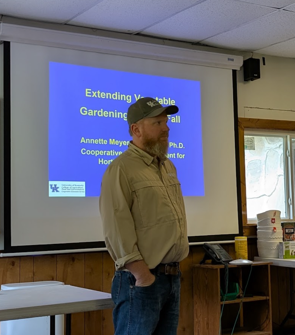
Over the last two months, we have hosted our In-Depth Garden Maintenance workshop, Harvest & Heart Healthy Cooking, and Hands-On-Canning workshops. As we look towards July & August, garden visits will be wrapping up and we have our Fall Gardening & Season Extension workshop on July 15 and our Seed Saving Workshop and Fall Plant distribution on July 28th.
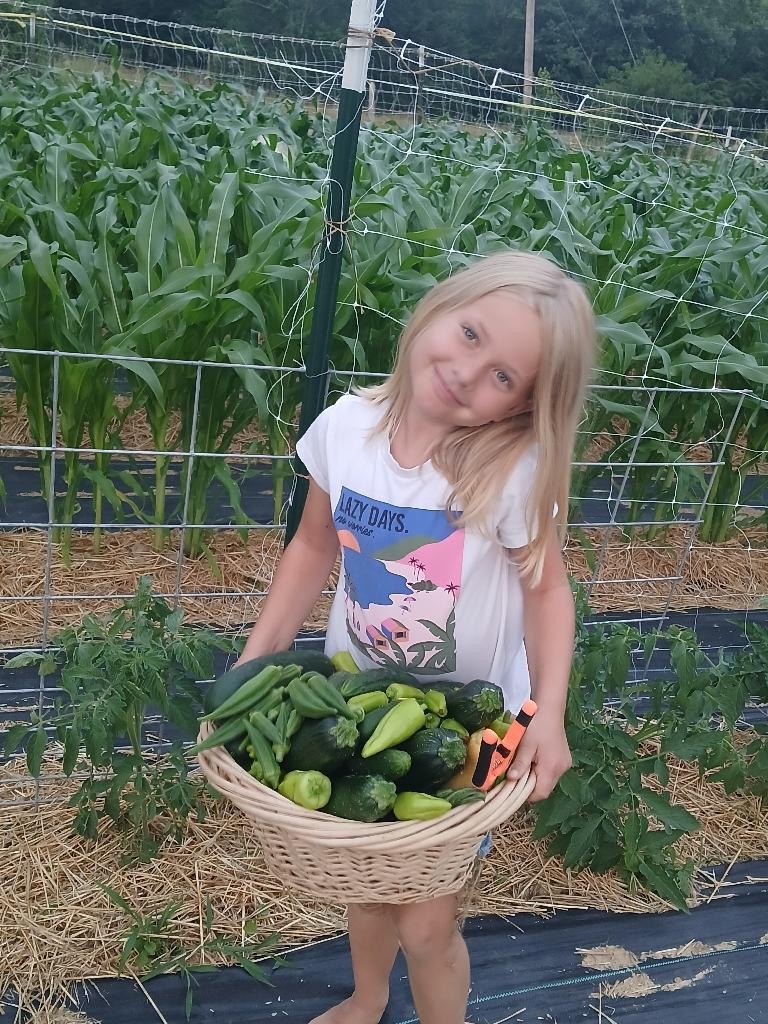
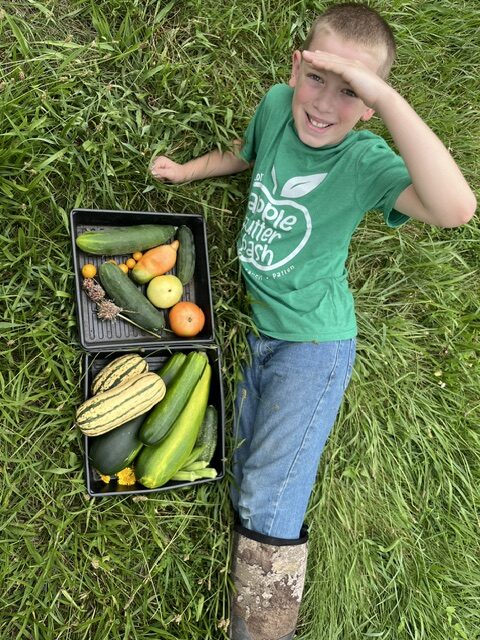
A collection of photos from our gardens: