
Natural Dyes at Pine Mountain
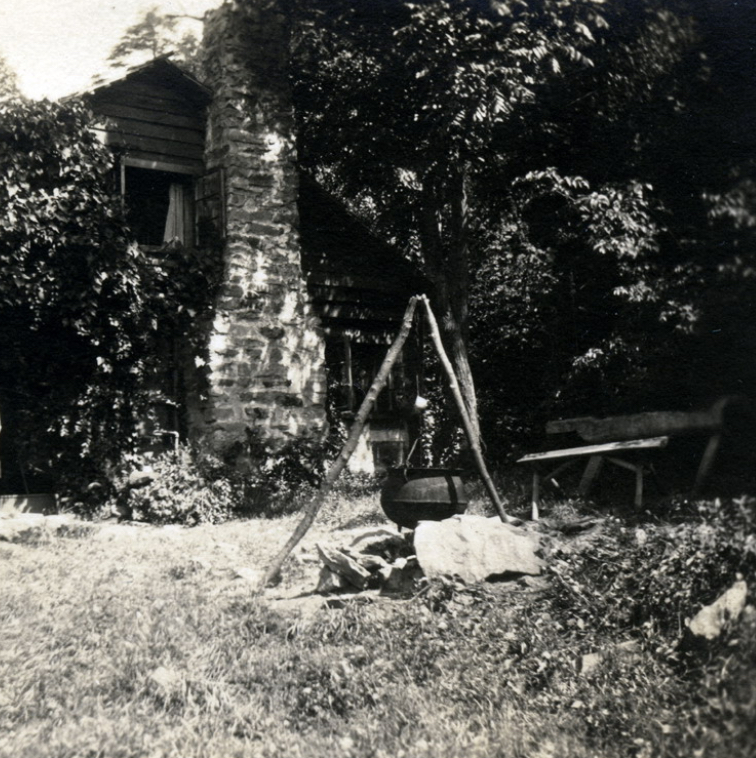
Dye pot on tripod outside Pettit's residence, Undated
Natural dyes use colors from items in our environment like soil, plants, and minerals, to create a color solution that can be added to a variety of fibers and textiles. Prior to the use of synthetic dyes, which are any dyes made through a chemical process, natural dyes are where the textiles and fiber that would be used in yarn, blankets, and clothing got their color.
At Pine Mountain Settlement School, natural dyes are an important part of the school’s history. Co-founder of school, Katherine Petit, even had several of her recipes preserved in Wilmer Stone Viner and H.E Scrope Viner’s 1946 book, The Katherine Petit Book of Vegetable Dyes.
Today, the art of natural dyes continues at Pine Mountain settlement school, where, on a late summer evening community members gathered for a workshop to learn about dye plants and create their own naturally dyed pieces.
Situated between the beehives and high tunnels, there exists a vibrant plot of marigolds, Seneca corn, Hopi sunflower, madder, black-eyed Susans, and Japanese indigo, cultivated specifically for dyeing purposes.

Pine Mountain Settlement School Dye Garden, September 2026
There are numerous methods to extract the color from dye plants onto fiber and textiles. However, on this particular evening we created a dye bath to bring the color of deep orange, yellow, and gold marigolds onto silk scarves.
The process of creating a dye bath with marigolds involves several steps, including harvesting the flowers, drying them, heating water with the dried flowers, and extracting the flowers from the water solution. Once flowers are extracted from the water, the remaining colorful solution is a dye bath in which fiber and textiles can be soaked in.
Before fibers can be dyed, they must also be properly prepared. Dyeing with our chosen fiber (silk scarves) consists of two key steps of preparation: scouring and mordanting. Scouring is simply washing the fabric well, to remove anything that may interfere with dye absorption. Mordanting is the process by which the fiber is exposed to a mineral salt solution to help bind natural dye colors to the fiber to prevent fading or washing away.
Using dried dye plants isn’t always necessary, however it does help to make the color more consistent by removing water and stabilizing plant pigments. Since drying flowers takes time, this step was completed prior to the workshop. Additionally, preparing the fibers through the processes of scouring and mordanting can take up to a week, therefore these steps were also completed prior to the workshop.
During the workshop, a measured portion of each marigold was added to a designated pot where it was heated with water for the dye bath creation to begin. While some plants are more sensitive than others, in general it is best to soak the flowers in the water for about thirty minutes, keeping the temperature around 160°F. Once the plants have been immersed for their designated time, they are removed from the water, and silk scarves are placed inside. At this workshop, our fibers soaked in the bath for about thirty minutes, then were rinsed with cool water and set-out to dry. Rinsing the scarves removes any excess dye materials and cools their temperature to a safe handling point.
The group ended their evening by admiring a variety of colorful pieces, and trading scarves made in their pot’s dye bath with others to obtain a variety of marigold colored silk.
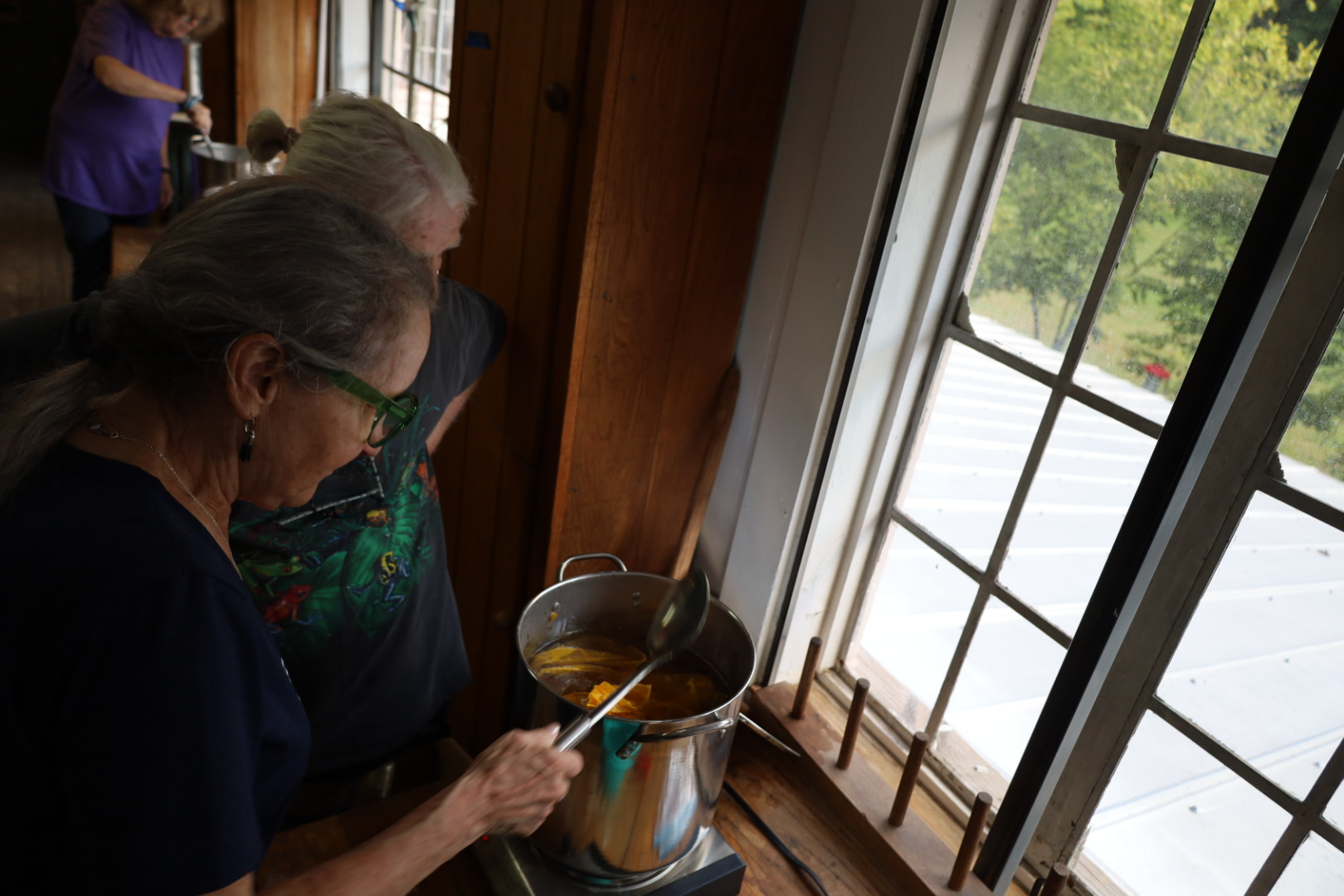
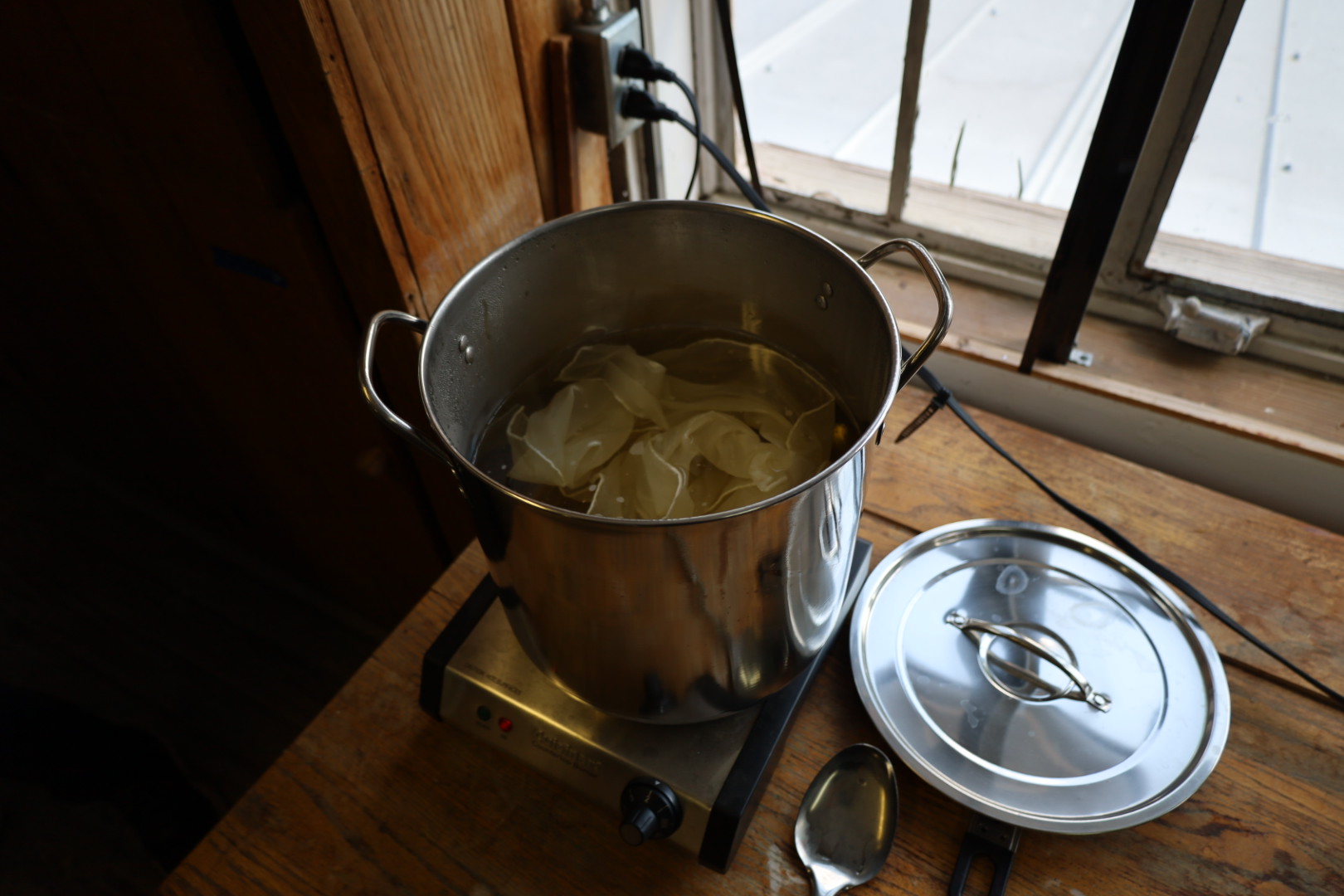
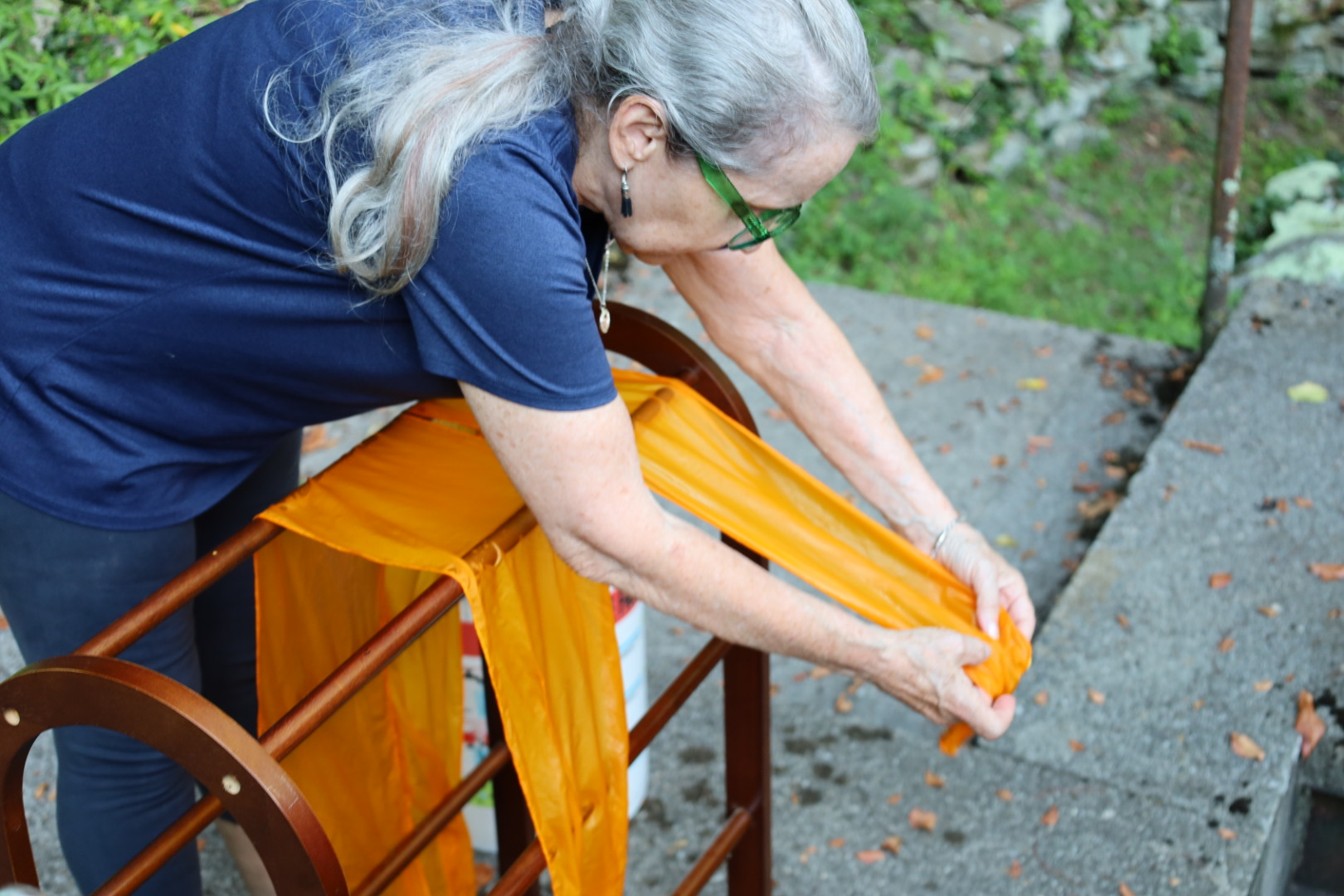
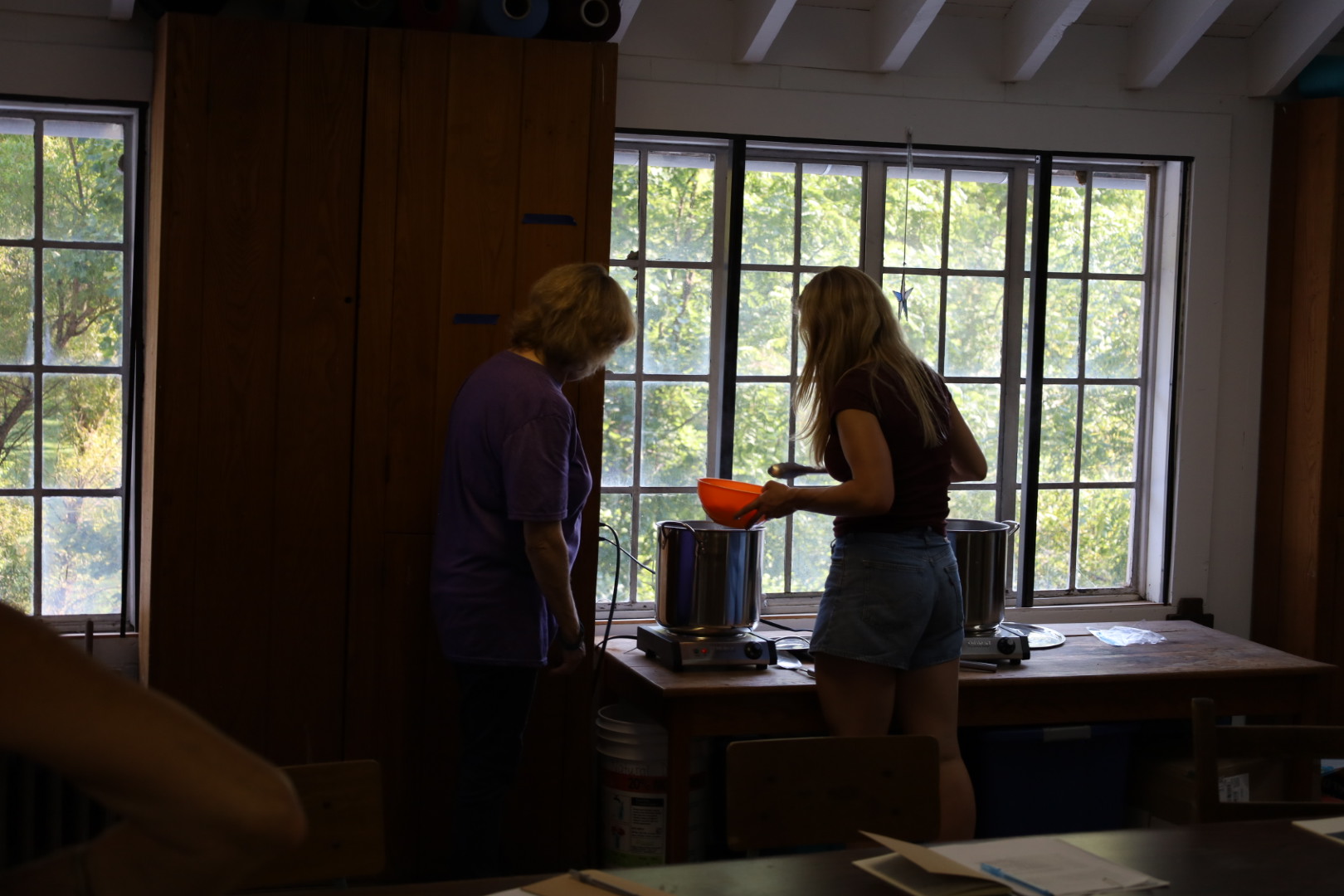
The field of natural dyes is interdisciplinary, combining science, history, and artistic creativity. This blend of craft becomes visible in the time and care involved in growing dye plants, preparing their color, and working that color into fiber and textile materials, a technique that gives each piece a significance far beyond its surface. Although synthetic dyes have become standardized in modern production, natural dye techniques continue to bring people together through shared learning and a connection to the land that sustains them.
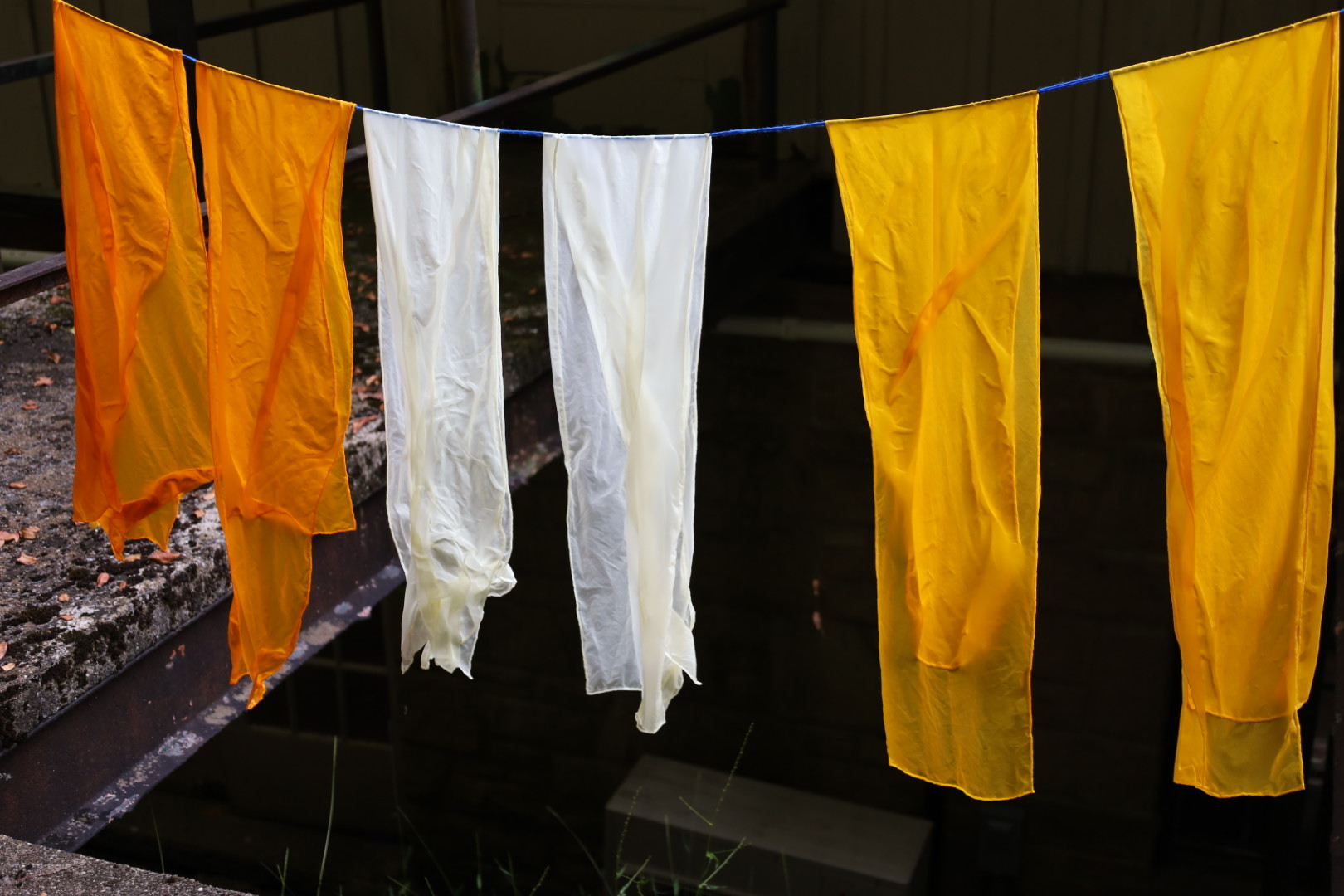
Final silk scarves from right to left: deep orange marigold, yellow marigold, gold marigold
“In almost all American families we find treasures of the past that are carefully handed down from generation to generation, and the one that is greatly treasured perhaps above all is the hand woven coverlet with its lovely delicate colors mellowed by time…The weaving by hand and coloring of these coverlets was no small task. And perhaps because it was such a slow and tedious task is the reason why these treasures are so lasting and so dear to our hearts” (The Katherine Petit Natural Dye Book, Viner and Viner, 1946)



Leave A Comment