
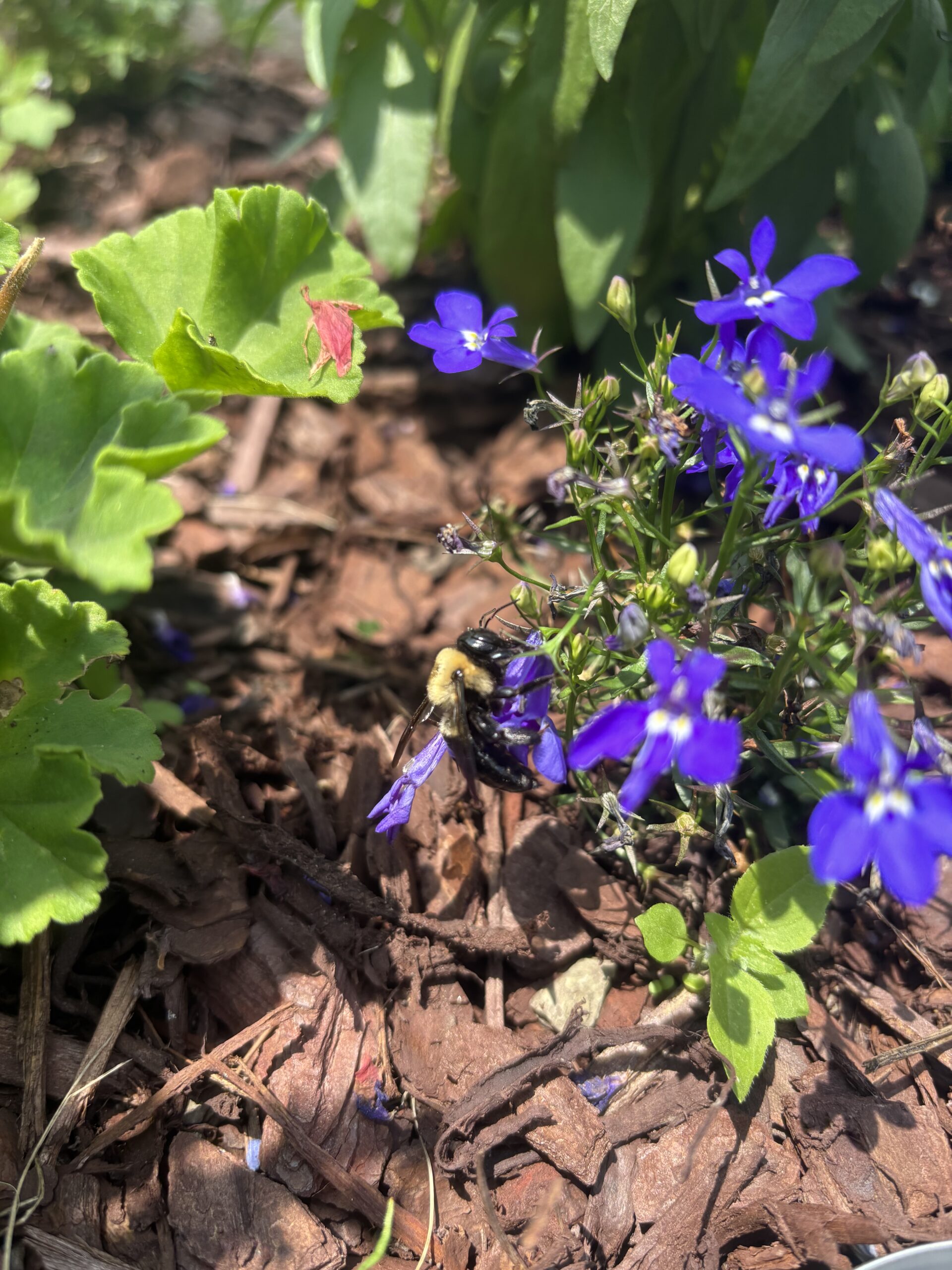
A pollinator garden is a combination of plants that specifically attract pollinators. A pollinator can be described as any insect or animal that aids in the transfer of pollen from the male to the female part of a plant. Examples of pollinators include bees, butterflies, birds, bats, moths, hummingbirds, and some beetles. Most pollinators feed on the nectar or pollen of the flower and as they travel from flower to flower, they can unknowingly deposit pollen picked up along the way which encourages the plants to fruit and reproduce.
Why have a pollinator garden? A pollinator garden will support and benefit the garden by increasing biodiversity through attracting beneficial insects and animals, improving the health and structure of the soil which reduces erosion, and boosting production and harvest of a vegetable garden if in close proximity. Additionally, a pollinator garden can make any space look beautiful with the diverse, vibrant colors of the flowers.
To make a pollinator garden, it is recommended to use native plants because pollinators are naturally going to gravitate toward these plants just like they do in the wild. Native plants are also considered low maintenance for their low pest problems and drought tolerance which is beneficial when wanting a low maintenance garden. In Virginia, a few native plants to use in a pollinator garden include butterfly weed, black-eyed susans, smooth blue aster, purple coneflowers, wild bergamot, sensitive pea, and eastern gray beardtongue. A pollinator garden can be made with native or non-native plants; however, native plants are naturally occurring in the wild and are a lower maintenance plant option for the garden when compared to non-native alternatives. Plant these native or non-native flowers, if chosen, in a sunny area, avoid using any pesticides because these will be harmful to the pollinators, and keep the garden healthy by adding compost to boost nutrients and organic mulch to decrease weeds.
A pollinator garden is an excellent way to attract and support pollinators. Pollinators are actively decreasing in numbers and are in dire need of supportive habitats. Pollinators are a vital part of the agricultural world, so we need to create suitable environments to support our pollinators!



Leave A Comment