
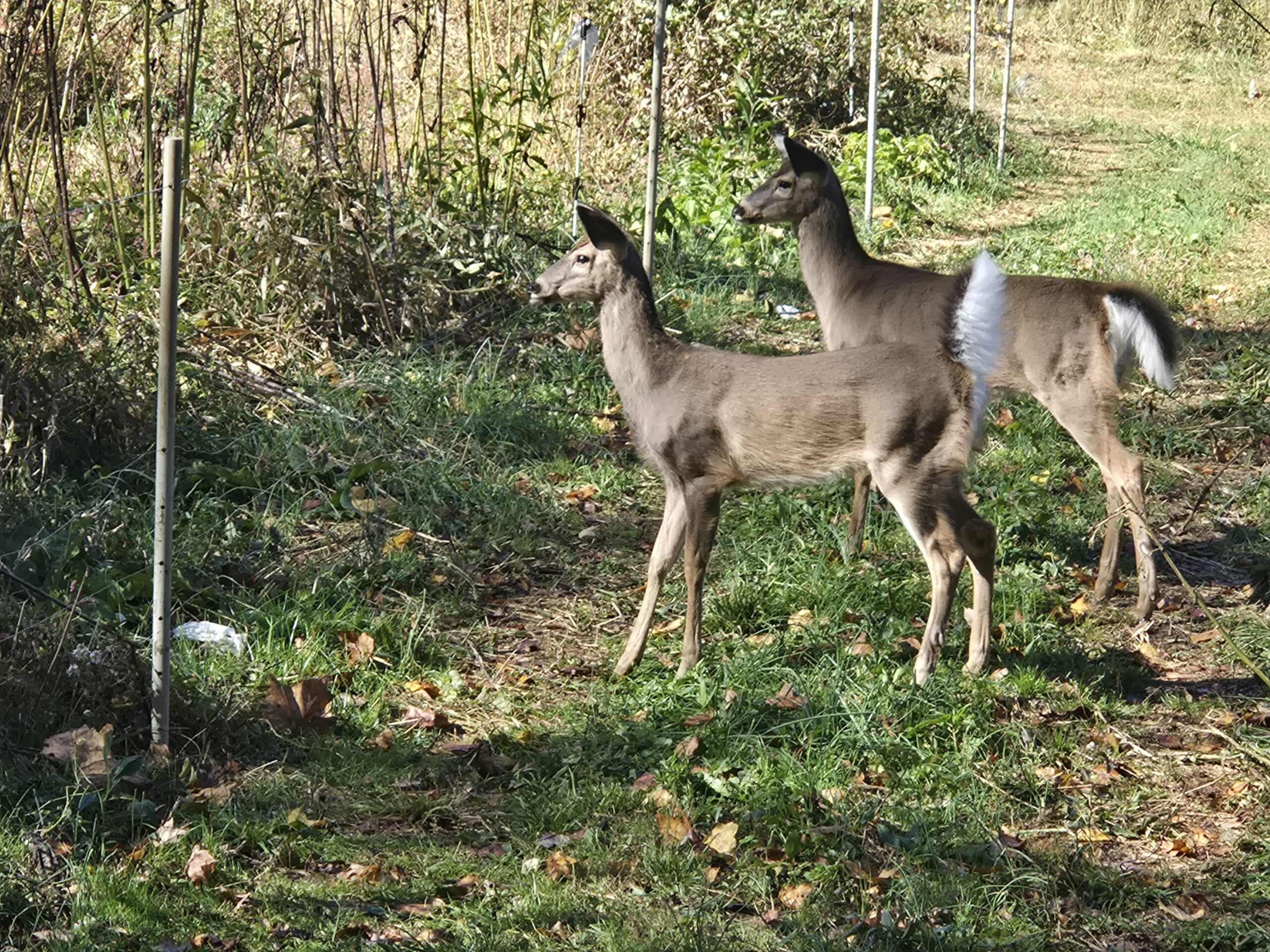
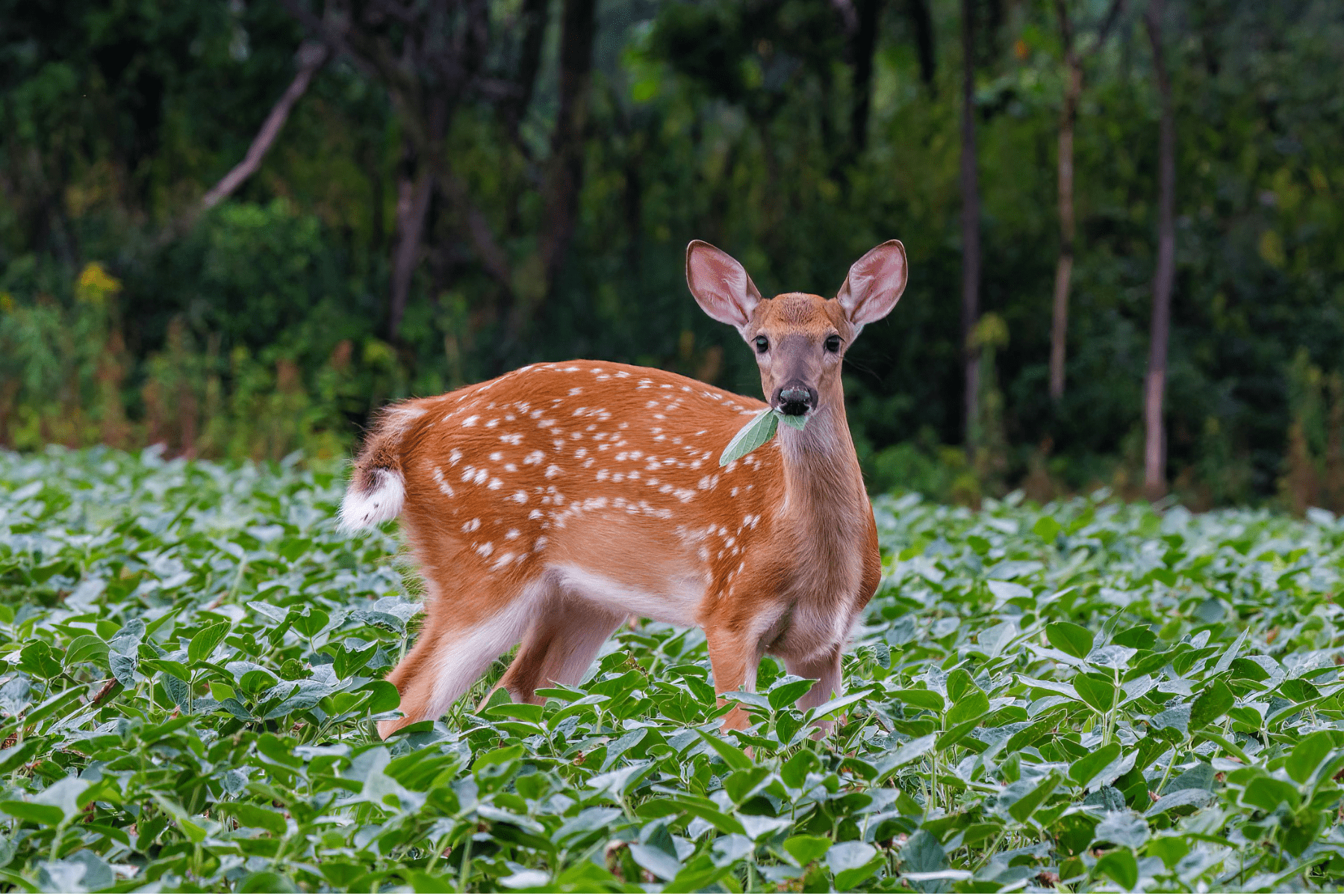
If you garden in Leslie County, you’ve probably experienced the excitement of watching your tomatoes ripen, your beans begin climbing, and your sweet corn stretch toward the sky. Then one morning you walk outside only to discover that something has eaten the tops off your beans, stripped the leaves from your peppers, or sampled every tomato just before you could pick it.
The culprit? White-tailed deer.

While deer are a beautiful part of our Appalachian landscape, they have become one of the biggest frustrations for local gardeners. As forests become fragmented and more people plant vegetable gardens, deer have learned that our gardens are an easy source of nutritious food. A single deer can consume several pounds of vegetation each day, and unfortunately, your carefully tended vegetables are often much tastier than the plants growing in the woods.
Many Grow Appalachia participants have shared stories this season of deer destroying entire rows of green beans overnight or eating every bloom from their squash plants before fruit could develop. After weeks of planting, watering, and weeding, it can be discouraging to lose a harvest in just one evening.
What Works?
The bad news is there is no magic solution. The good news is that combining several methods can greatly reduce deer damage.
1. Install a Fence
Fencing remains the most effective way to protect a vegetable garden. An 8-foot fence provides the best protection because deer are reluctant to jump into enclosed spaces. For smaller gardens, temporary electric fencing or double-row electric fencing can also be very effective and is often less expensive than permanent woven wire fencing.

2. Use Deer Repellents
Commercial deer repellents can help, especially early in the growing season. They work best when applied before deer develop a habit of visiting the garden and must be reapplied after heavy rains. Rotating different products can also help keep deer from becoming accustomed to them.
3. Add Motion and Noise
Motion-activated sprinklers, reflective tape, pinwheels, or hanging aluminum pie pans can startle deer. These methods usually work best when changed frequently so the deer don’t become accustomed to them.
4. Plant Less-Appetizing Borders
While no plant is completely “deer-proof,” aromatic herbs such as rosemary, sage, lavender, mint, and chives are generally less attractive to deer. Planting these around the edges of the garden may help discourage browsing while providing useful herbs for the kitchen.
5. Invite the Deer to Dinner
If you’re a deer hunter or know one, you can contact the Kentucky Department of Fish and Wildlife about how to apply for Nuisance Deer tags. This will allow you to harvest more deer.

Don’t Give Up
If deer have visited your garden this year, don’t let it discourage you. Gardening always comes with challenges, whether it’s drought, insects, disease, or wildlife. Every season teaches us something new.
One of the greatest strengths of the Grow Appalachia program is that gardeners learn from one another. If you’ve discovered a successful way to keep deer out of your garden, share it with fellow participants at our next meeting. Your experience may help someone else save their harvest.
After all, the tomatoes, beans, and sweet corn belong on your family’s dinner table—not on the neighborhood deer’s menu!



Leave A Comment