
By Shayla Lucas
This year, I am leaning more into the idea of really establishing perennials in the garden. I love the annual garden, but I am in a season of life with young children that annuals are a lot more work than I am able to really manage right now. I’ve always loved starting my own seed so that I can grow my plants organically from the start, but managing seed starting and also the replenishing and flipping of the garden beds with new crops every year is a lot of work for me currently as the main gardener in the family.
I want to produce as much food for my family as possible, and I know perennials are hardy, they want to keep growing and expanding and producing, with a lot less work from the gardener than annuals. Perennials also seem to be so much more pest and disease resistant than annual foods, such as tomatoes, beans, squash, etc. I also see the possibility of using more of my garden real estate for perennials to have cash crops to sell some of the food grown to my local community.
For years, I have truly enjoyed watching my asparagus and strawberries share garden space and continue to grow and produce for our family. I currently have three different types of asparagus in those beds: Jersey giant, Purple Passion, & Mary Washington. Among those plants are also everbearing strawberries, my favorite, Ozark Beauty, and they seem to thrive together. There are not really pests, other than my dairy goats that seem to be drawn to the berry plants when loose.
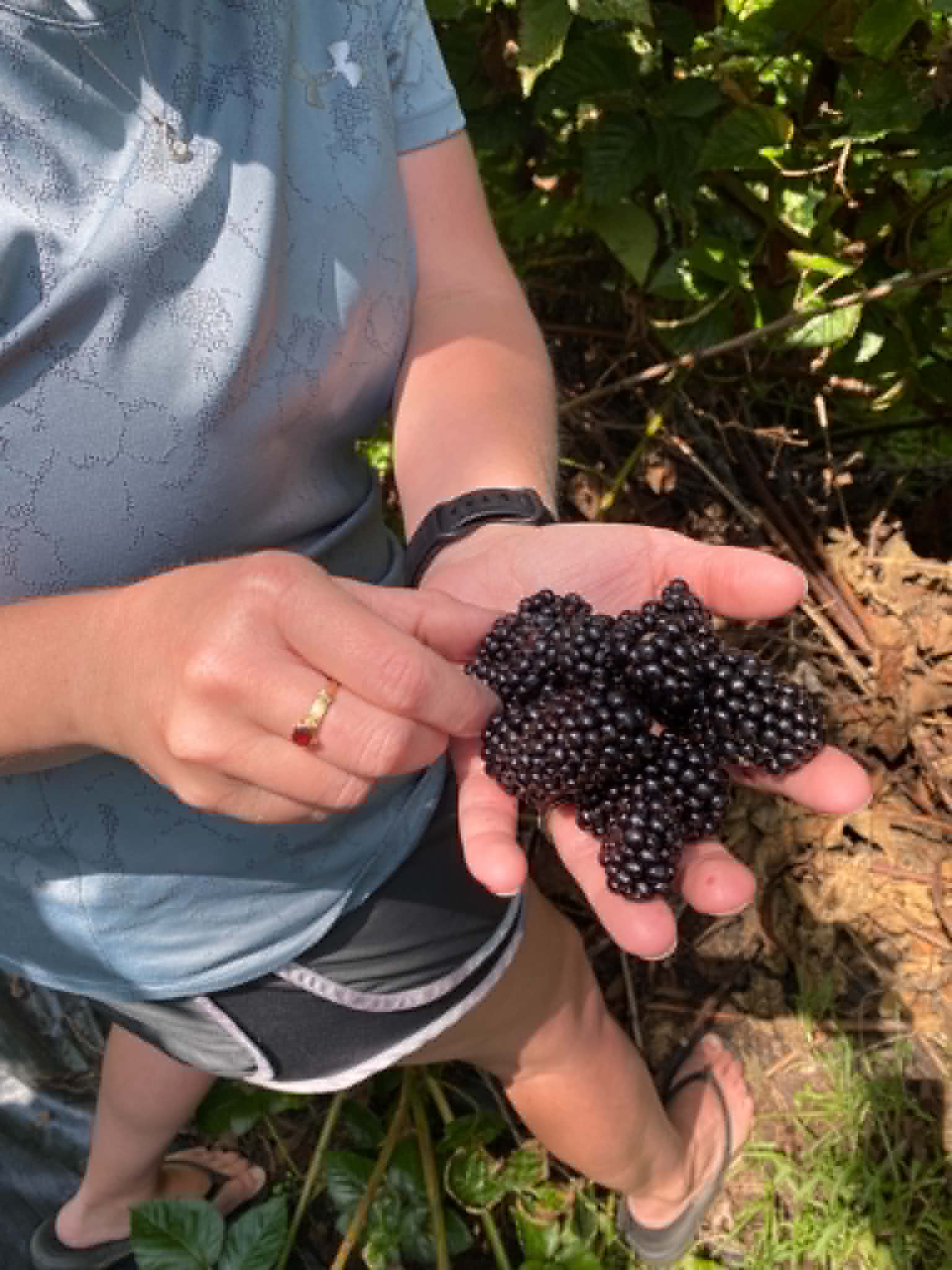
I also have a high tunnel that I am planning to transition from an annual production space to a perennial one, as I have seen this done by a friend here where I live in southern West Virginia and his production is wonderful. He has a whole row of fig trees down one side of the tunnel, fresh figs being something that we don’t have access to down here unless someone grows them locally or you do yourself. In the center of his tunnel, he has an entire row of Prime Ark blackberries that literally almost climb to the top of the tunnel and produce some of the largest berries, all sweet and uniquely flavored, that I’ve ever seen. In his rows, he mixes in other crops that benefit pollinator interaction and pest control, like hyssop. And then, something that is very neat, he keeps kale plants, years old, basically perennialized, that have stalks as thick as trees, throughout the rows. Seeing this low maintenance system really has inspired me to transition what I am doing every year so that we are harvesting more, planting and fussing over plants less.
For my tunnel specifically, I have planted a row of fig trees, just like my friend, Chicago Hardy. I am planting the Prime Ark blackberries in the center, just like him. I am going to try to squeeze in a row of Heritage raspberries, because I think the tunnel keeping the plant and berries dry will be very beneficial for harvesting quality food and then we can also harvest the leaves for Raspberry Leaf Tea, which I love and use a lot during pregnancy and breastfeeding. Somewhere among this perennial jungle, I want to plant strawberries and asparagus. And then in the front of my tunnel, at the entrance, I have a very small section that I’d like to plant rhubarb.
Last, another perennial addition that I am super excited to add to the tunnel is a mixture of mushroom varieties. I have ordered a type of mushroom called Winecap that grows in the beds/aisles of the garden in wood chips, which I have a lot of because we use them in a no-till/low till setup in the tunnel. These mushrooms seem to be very productive, easy for beginners, and also pretty self-sustaining, so I’m eager to see how they spread and produce in the 24 x 48 tunnel space. Another plan, that we will try this winter, is outlining the beds in the tunnel with oak logs inoculated with Shiitake mushroom spawn. Again, I am trying to grow and produce crops that are very low maintenance and take little effort out of me. We happen to have a lot of white oak around us, and just so happens down the road right now, our neighbor is having his property logged, so he is letting us harvest the scrap trees tops of his hardwood trees to inoculate with the mushrooms. This is something I think my whole family will enjoy, as my kids and husband love to use power tools, and it is something we can do during the “off” season of the garden and homestead, in the garage near the wood stove.
These crops are all foods we eat as a family, but also something I think I can really rely on as a cash crop for selling locally. Outside of the tunnel, I am also excited to plant some new gooseberry plants I got from a seed festival in Missouri this summer at Baker Creek Seeds. I plan to plant them by my house on the eastern side, to hide them from the evening sun and heat. I have also picked out three peach trees to grow on the south-most facing point of our yard, because my children love peaches. I want to continue to add other fruit trees and even some elderberry patches, but finding locations to do that is always the trick, I have found.
I planted fruit trees many years ago when we first got to our property, having bought them from a local nursery and not doing any research on the varieties when I got them. They seemed to not have good disease resistance, so every year their growth was poor and their leaves always seemed unhealthy. I am now making sure I do research and only buy plants that have good disease resistance before I waste money and years of time on ones that do not.
Overall, I think this shift to much more perennial plants will be a good move for our family in this current season of life, and we will still grow our annuals, just at smaller amounts and with more intention so that I am not overwhelmed with their care and potential failures, as I raise my 5 year old daughter, 3 year old son, and unborn baby in the garden alongside their father and I.
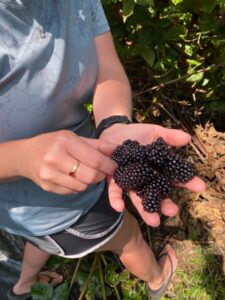
Prime Ark Blackberries being grown in the high tunnel.
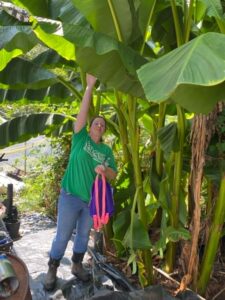
Kelsey Gable standing in the perennial high tunnel with all the plants!
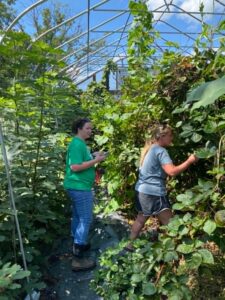
On the left a row of figs and on the right a row of blackberries in the high tunnel.
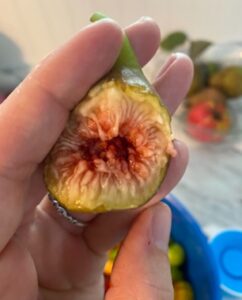
Fresh, local figs!
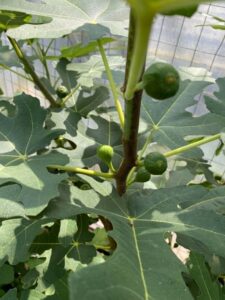
Fig trees growing inside the high tunnel.



Leave A Comment