
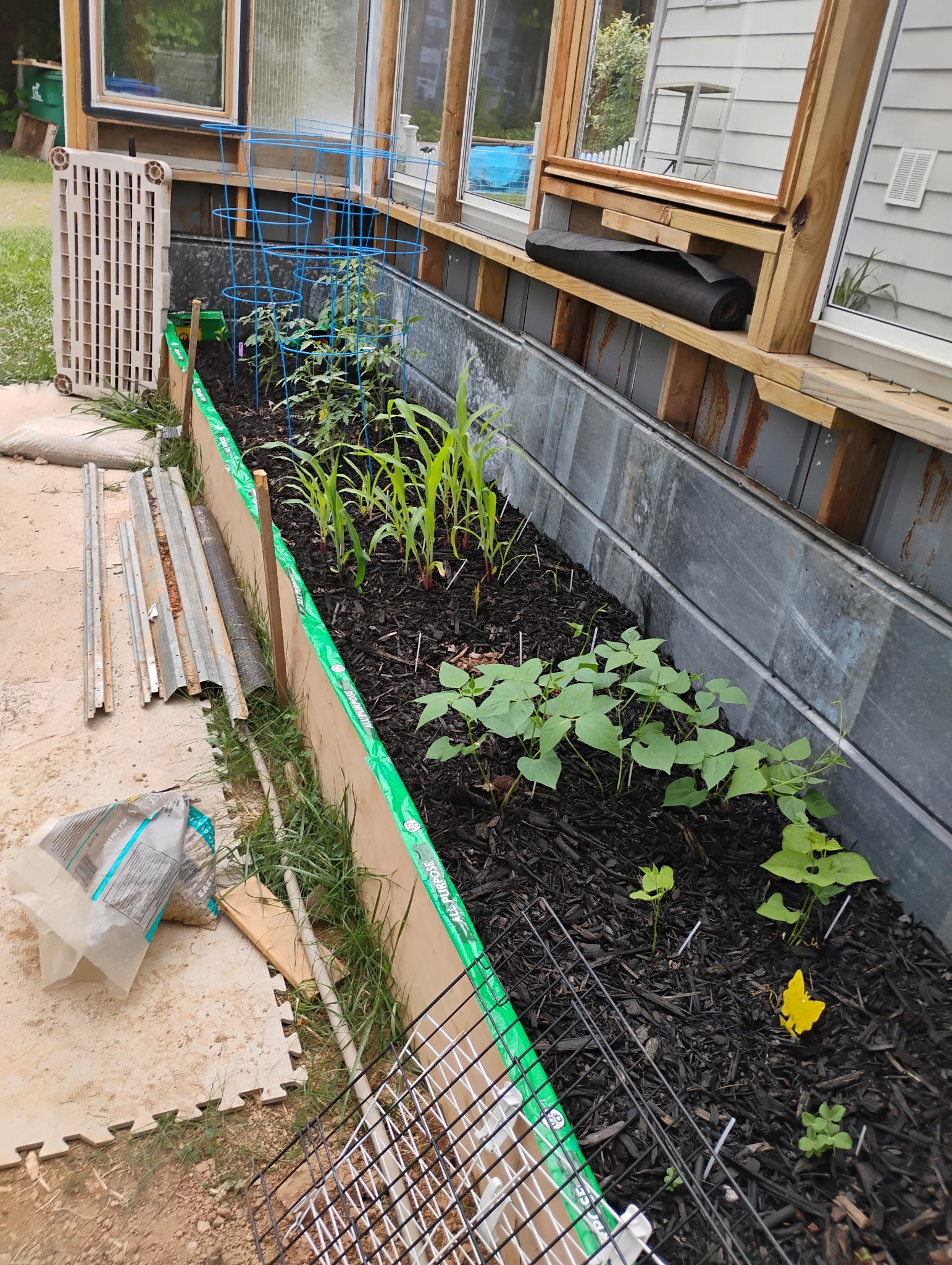
This season’s irregular weather patterns are proving to be challenging even to our area’s most experienced farmers. Props to all of our new gardeners who are still up for the challenge of growing their own food! It’s understandable that things are going to vary slightly year to year, but we’re still feeling the effects of that last late cold snap. Unusual periods of drought followed by torrential downpours, cooler than average nights…quickly jumping to 90+ degree hot & humid days. All of our cool weather leafy greens have been happy up until very recently, so we’ve been trying to educate gardeners about seasonality and lining up succession plantings. Out with the old, in with the new! I’ve been getting messages like, “Why aren’t my peppers growing?” and “Why is my basil still so small?”, hoping they find some relief when I commiserate…”Mine are pitiful too! But we have a long season ahead of us.”
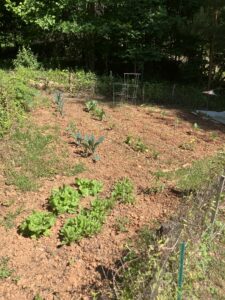
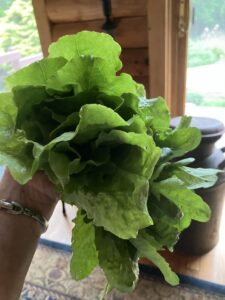
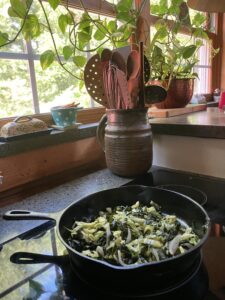
Ilsa’s garden spot in the woods – shadier garden rows producing lovely arugula, lettuce, and collard greens.
Our last class & workshop in June going over garden pests & management felt more like a support group. What was once a vigorous kale plant is now dappled with holes and caterpillar frass. Heads of luscious lettuce now stretching out to go to seed, becoming bitter in the heat…and wow, this heat! Those days of spending hours and hours playing outside in the garden are now consolidated to early mornings or late evenings to protect ourselves from the sun, which just seems to burn brighter than in years past. We’re trying our best to be flexible and learning how to adapt with the changing, challenging seasons.
First time growers like Michael admitted to finding the building, seeding, and transplanting stages as not the most exciting work…and felt it was just that: work. As weeks passed and plants matured, he expressed he finally gained a bit more understanding when harvesting that first crop of potatoes! The dopamine hit with each potato unearthed, feeling the thrill of the hunt. Getting up close & personal with the soil dwellers – the earth worms, millipedes, and woodlouse. Finding some plants damaged by Colorado potato beetles and other critters, but thanking them for sharing the harvest with us. Big huge potatoes alongside small, perfectly bite-sized potatoes…harvest basket getting heavier and heavier, brimming with so many meal possibilities. Standing up after reaching the end of the row, looking back at all that freshly worked soil, and asking, “What should we plant next?!”
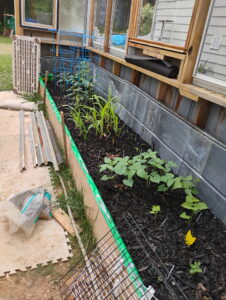
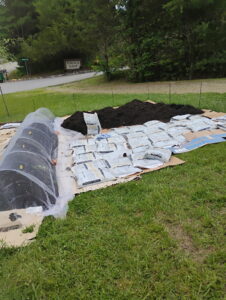
Starting with a hand-built greenhouse, expanding out to a hugelkultur bed, and a new row in the works?! I think Michael & Sarah have caught the gardening bug…
Now that we’re getting into harvest season, educating our community on how to prepare and preserve food is crucial to our rural food sovereignty. We are grateful to be in collaboration with the Leicester Food Coalition to offer hands-on workshops in food preservation & cooking. A few weeks ago some of our backyard gardeners joined in on a Jam & Jellies workshop, learning how easy it can be to make their own, and the positive impact of buying fresh seasonal fruit from local farms. This weekend we’ll be exploring hot water bath canning – pickling cucumbers and okra with a variety of brines and spices. Next week’s class our local Food & Nutrition expert with the NC Buncombe Extension Office will go over additional methods of food preservation like dehydrating and pressure canning. We hope these educational food classes can rekindle our community’s relationships with the land and the nourishment we receive from it.
—–
Some words about the plants.
It may be small.
It may be slightly off
or underwhelming.
Not a cottage dream garden nor a community flowing hub.
But it’s my little garden.
Kore’s gossamer garden.
Our garden.
I am glad to have my hands
in the dirt.
I am grateful for
the knowledge being shared with us.
The support with roots.
Sometimes a little garden is a big hope.
Beth Phipps, 2026
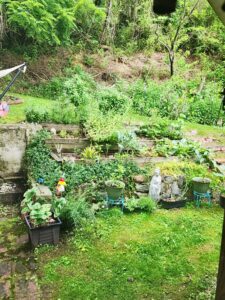



thanks for adding my poem. And this is well written