Cultivating Mushrooms and Community at Pine Mountain Settlement School
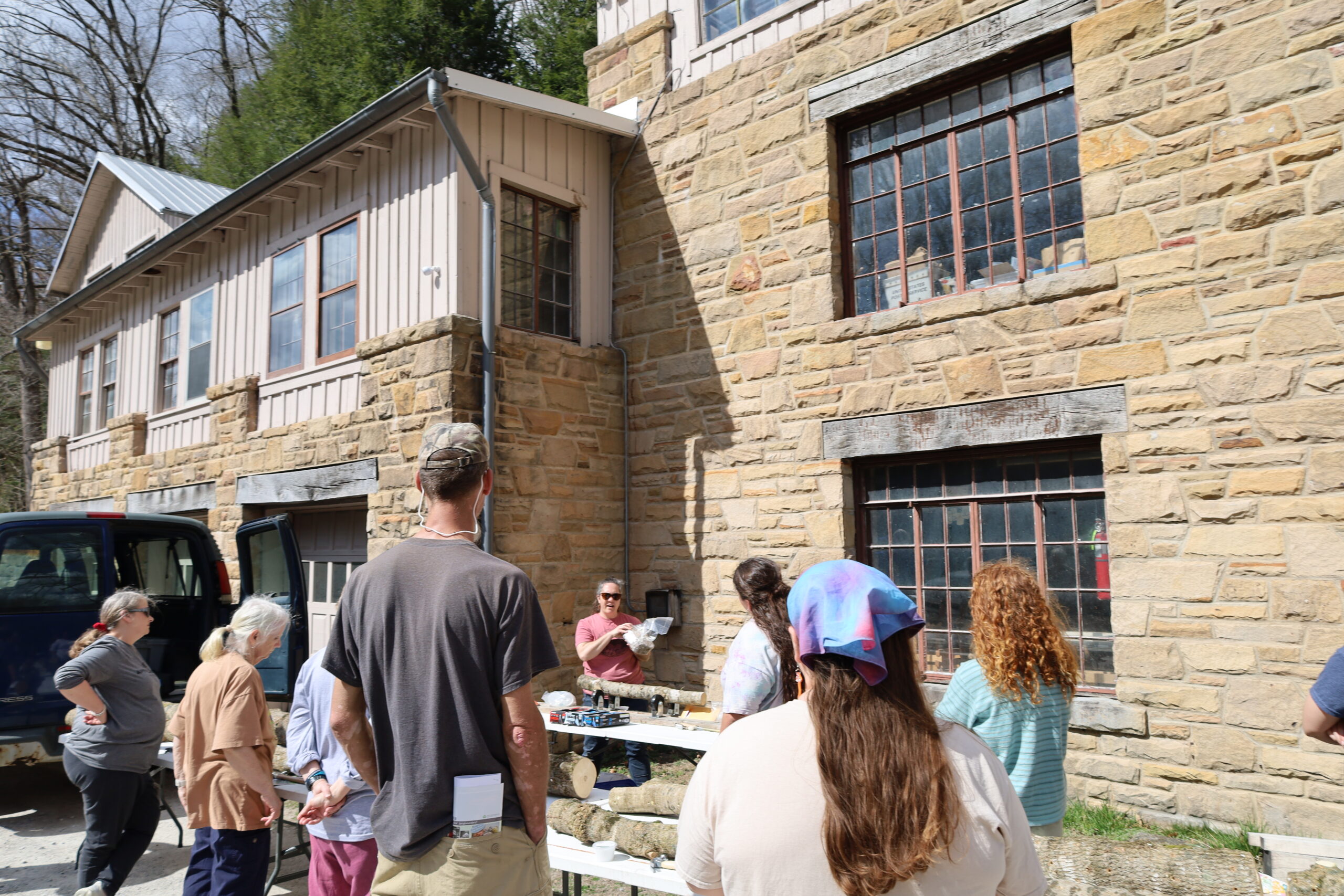
In early March, several Grow Appalachia participants welcomed the arrival of spring at Pine Mountain Settlement School by attending a Mushroom Cultivation workshop, led by Maggie Bowling and provided through Pine Mountain Settlement Schools’ Pass it On Series. Maggie currently oversees all vegetable production at Old Homeplace Farm in Oneida, KY and as a former Grow Appalachia site Coordinator for Pine Mountain Settlement School, she understands the importance of continual learning experiences in agriculture and the significance of empowering families to produce their own food. These values were reflected throughout the hands-on mushroom workshop, during which participants cultivated their own growing system for oyster mushrooms.
Prior to the workshop, Maggie prepared a mix of tulip poplar and box elder trees by harvesting them from her farm and letting the pre-cut logs rest for about two weeks. This rest time is essential to drain excess moisture and breakdown the tree’s natural defense properties against fungus. After allowing the logs to rest, Maggie used a specific drill bit to insert holes into the wood which would eventually be filled with a starter material for mushroom colonization, referred to as spawn. Maggie concluded her preparation summary by giving participants enough information to prepare their own wood at home and by emphasizing the importance of harvesting trees sustainably.
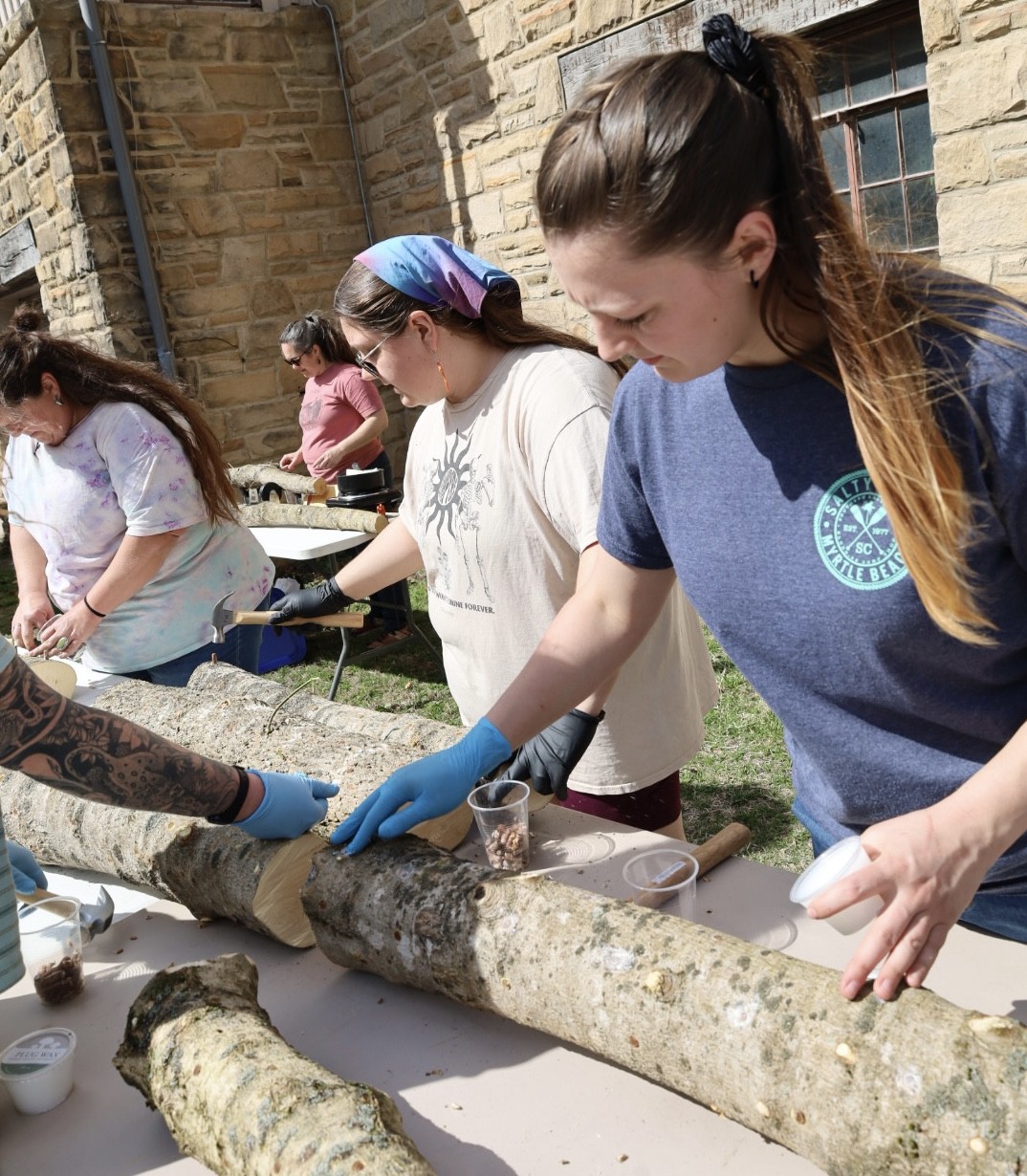
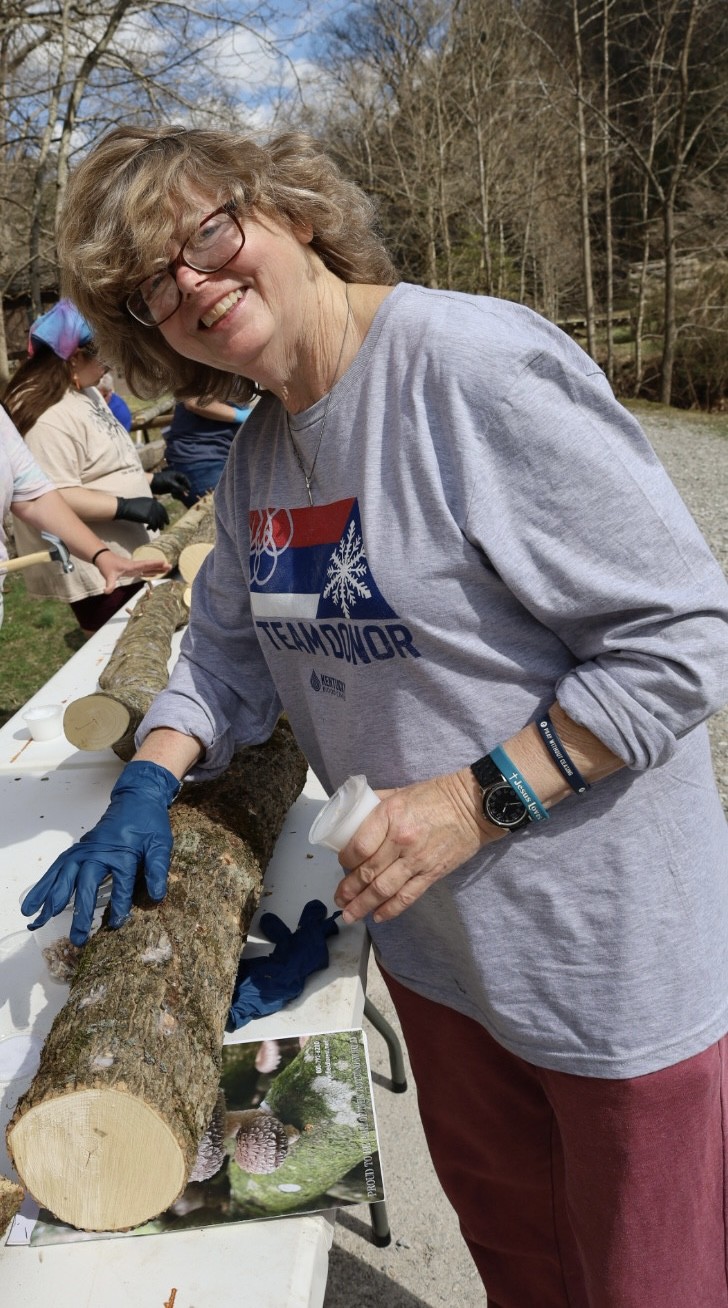
Once participants got to work with their prepared individual logs, oyster mushroom spawn was carefully placed into the drilled holes, then sealed with wax to take home. This process of introducing mycelium (the root-like structure of fungus) into wood creates an environment for the oyster mushroom to grow, and is called inoculation. At the end of the workshop, participants were able to take home their own inoculated log and are expecting to harvest oyster mushrooms this fall.
Undeniably, fungi are spectacular but perhaps more significant than what was learned during the workshop, were the conversations about food throughout. When asked by a participant what her favorite mushroom was, Maggie responded, “Oyster. Oyster mushrooms are mild and easy enough that you can cook with them in any way.” The mention of cooking in Maggie’s answer sparked numerous stories about recipes and mushroom cooking techniques. Ultimately, this workshop highlighted not only the value of hands-on agricultural learning, but also the deeper connections that form when communities gather around growing and sharing food.


Leave A Comment